PRACTICES AND TIPS TO FOSTER INCLUSIVITY

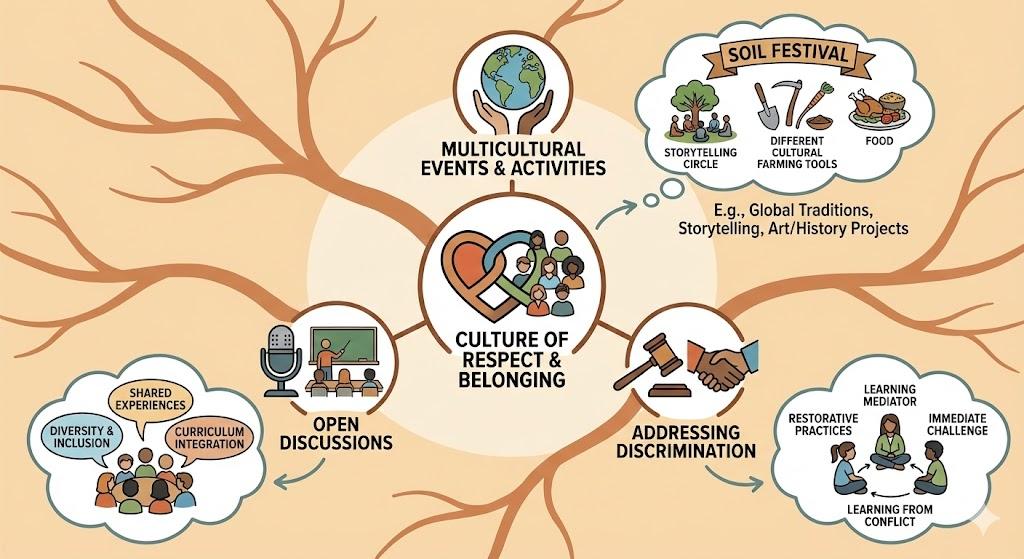
Promote a culture of respect and belonging:

  • Develop a school ethos that celebrates diversity by organizing multicultural events and activities.
  • Encourage open discussions about diversity and inclusion in school assemblies and classes.
  • Address and challenge discriminatory behaviour immediately through restorative practices.

E.g. Organize a "Soil Festival" to celebrate the diverse cultures and traditions connected to soil stewardship globally. Include storytelling sessions where students from various backgrounds share traditional farming or soil conservation practices from their cultures.

Incorporate soil-related topics in school art and history projects, encouraging students to explore and present their cultural connections to soil and agriculture.

 cuklture-of-respect


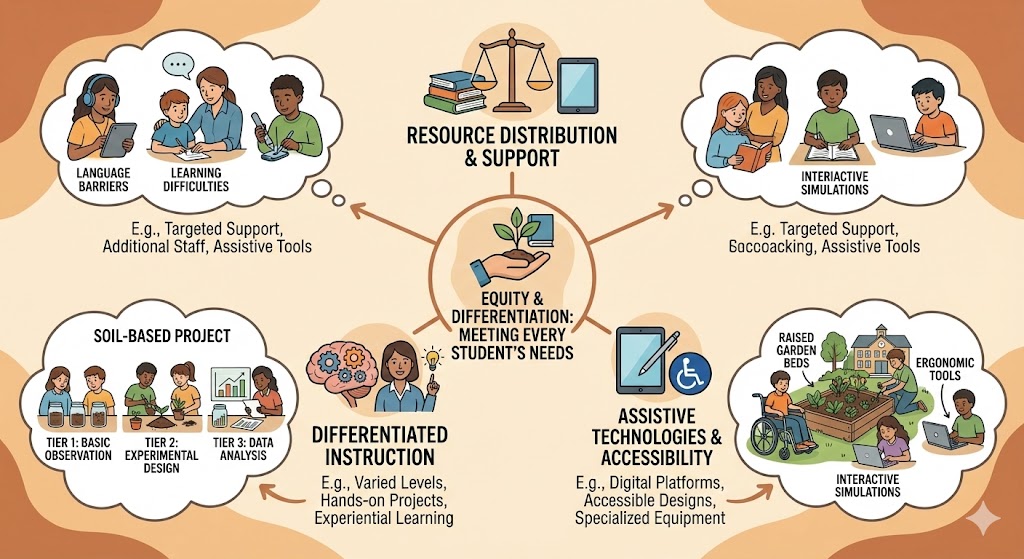
Provide equitable learning opportunities:

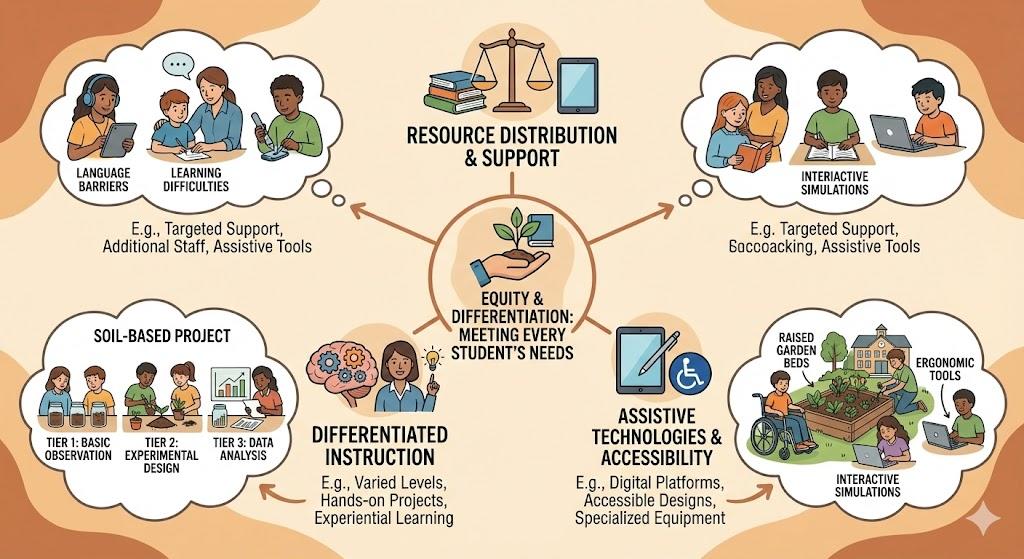
      • Ensure resources are distributed based on students' needs, with additional support for those facing language barriers or learning difficulties.
      • Introduce differentiated instruction techniques to cater to various learning styles and abilities.
      • Invest in assistive technologies that aid learning for students with disabilities.

       E.g. Introduce soil-based hands-on science projects, tailored to different learning levels, such as growing plants in varied soil types and observing differences. Set up a school garden or a small-scale farm where students can engage in experiential learning.

    • Ensure accessibility for students with disabilities by including raised garden beds and providing ergonomic gardening tools. Utilize digital platforms with interactive soil-related simulations and activities that cater to diverse learning styles. Collect soil samples, drying and sieving them, then use them for creative activities

 cuklture-of-respect


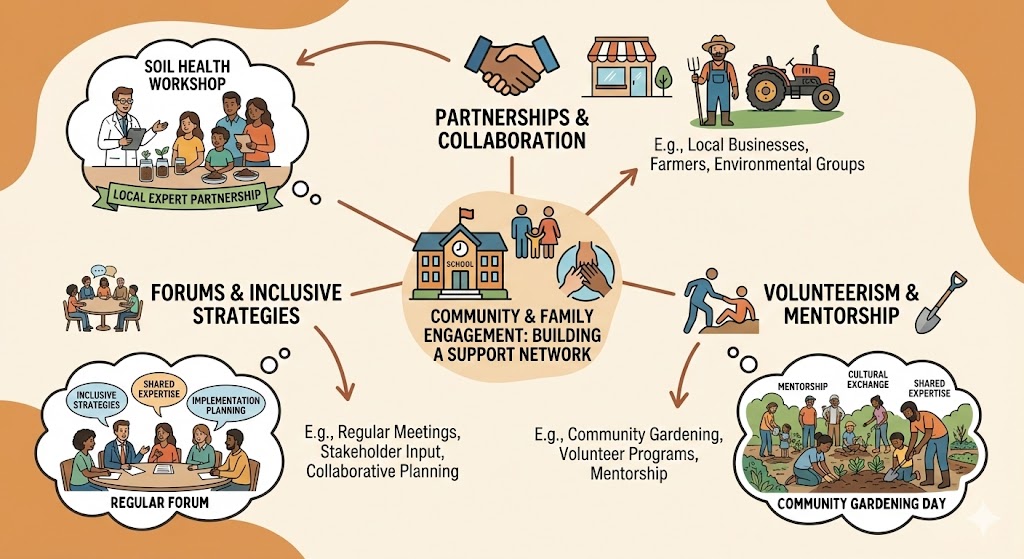
Engage the community:

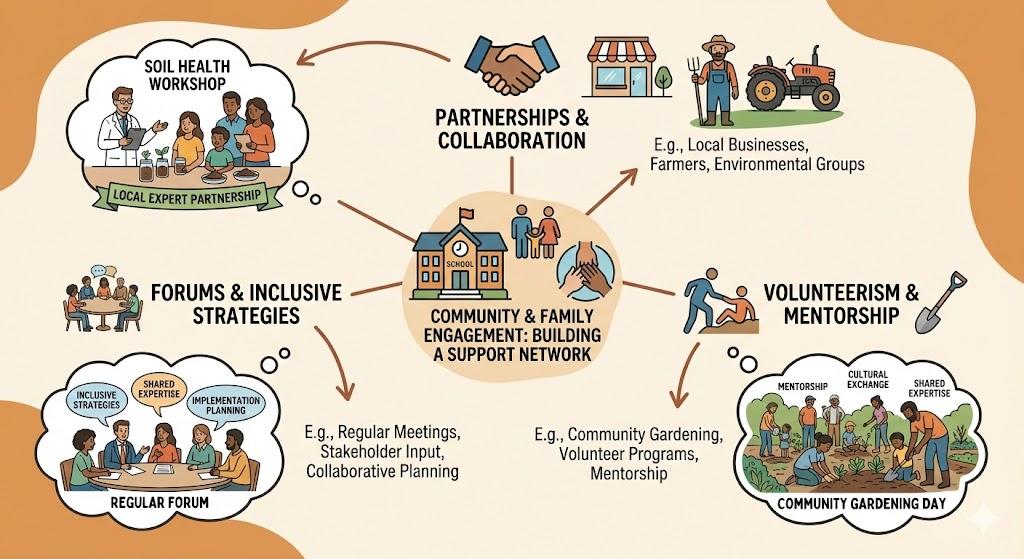
    • Build partnerships with parents, local businesses, farmers, and community organizations to create a support network for students.
    • Organize regular forums and workshops involving teachers, parents, and community members to discuss and implement inclusive strategies.
    • Encourage volunteerism and mentorship programs to foster community engagement.

    E.g. Partner with local agricultural experts or environmental groups to host workshops for students and parents on soil health and conservation. Organize community gardening days that include workshops on soil types and planting techniques, allowing community members to share expertise and cultural practices regarding soil.


 cuklture-of-respect


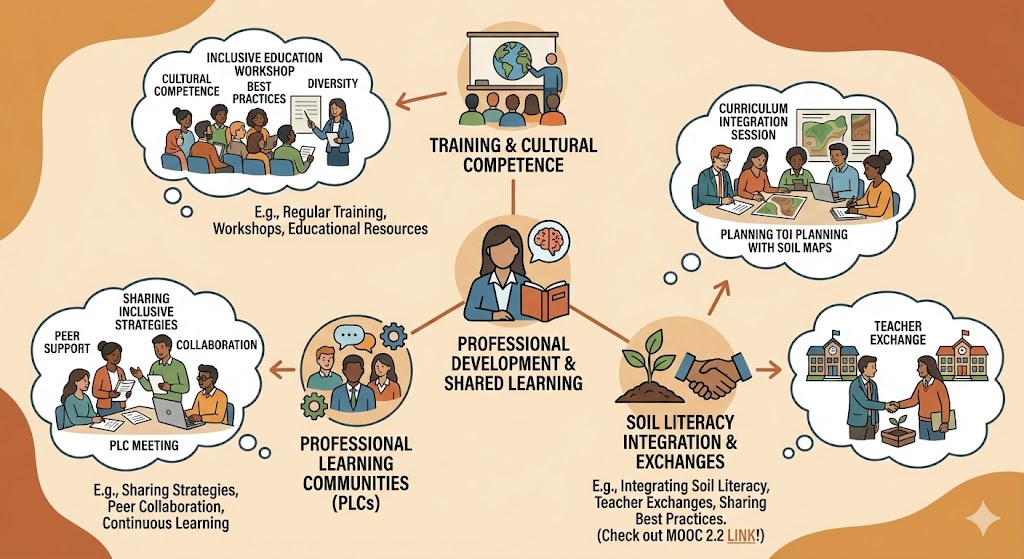
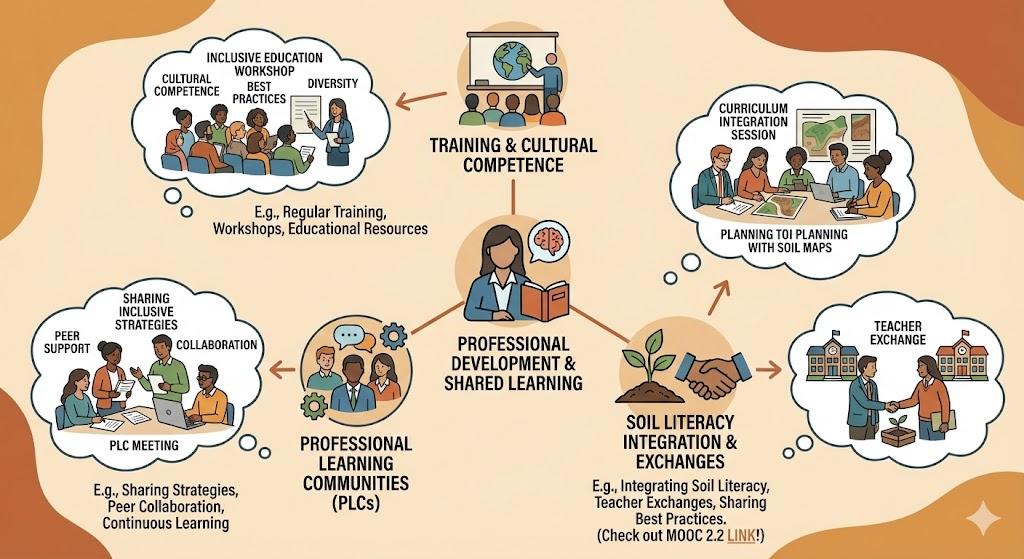
Professional Development for Staff:

  • Provide regular training for teachers on inclusive education practices and cultural competence.
  • Encourage staff to share inclusive teaching strategies through professional learning communities.

E.g. Support continuous learning by offering access to educational resources and workshops. (Check out our MOOC 2.2. LINK!) Offer teachers professional development sessions on integrating soil literacy into different curricula, such as science, geography, and social studies. Facilitate teacher exchanges or collaborations with schools that have successful soil literacy programs to share best practices and resources.


 cuklture-of-respect


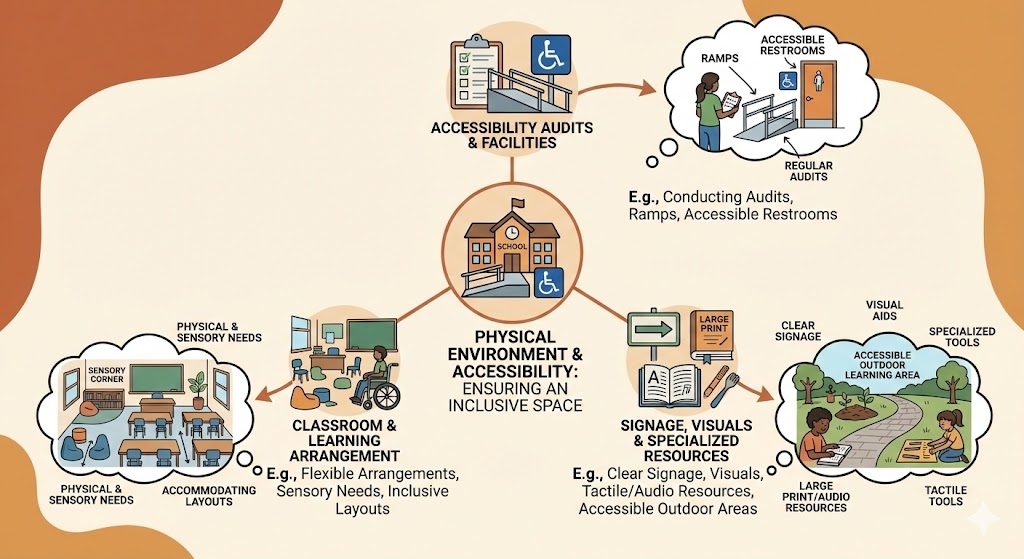
Create an accessible environment:

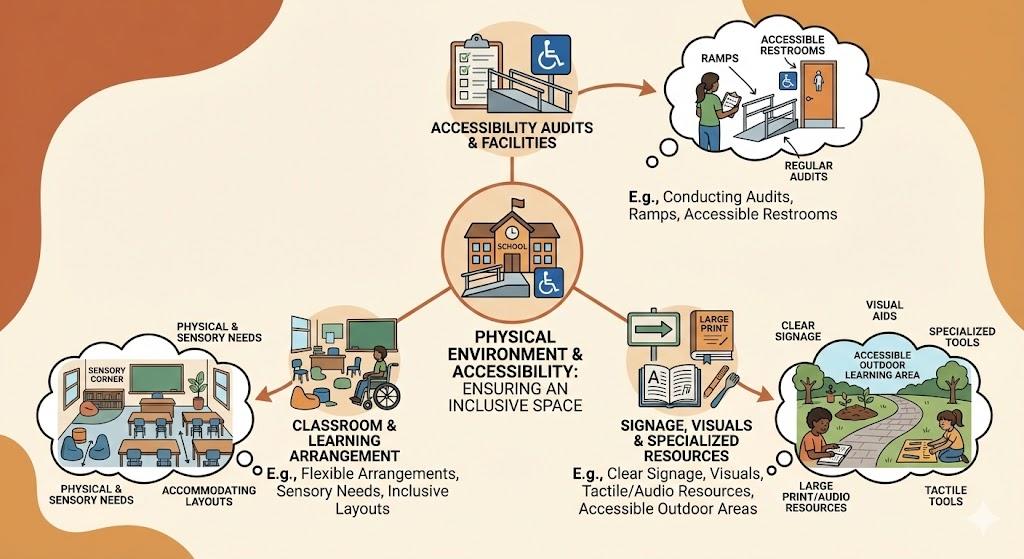
  • Conduct accessibility audits to ensure facilities cater to students with physical disabilities, such as ramps and accessible restrooms. 
  • Display clear signage and use visuals to aid navigation for all students.
  • Ensure that classrooms are arranged to accommodate students' physical and sensory needs.

E.g. Construct an accessible outdoor learning area for soil studies, including paths suitable for all mobility devices. Use tactile teaching tools and large print or audio resources for students with visual impairments during soil-related activities.

 cuklture-of-respect


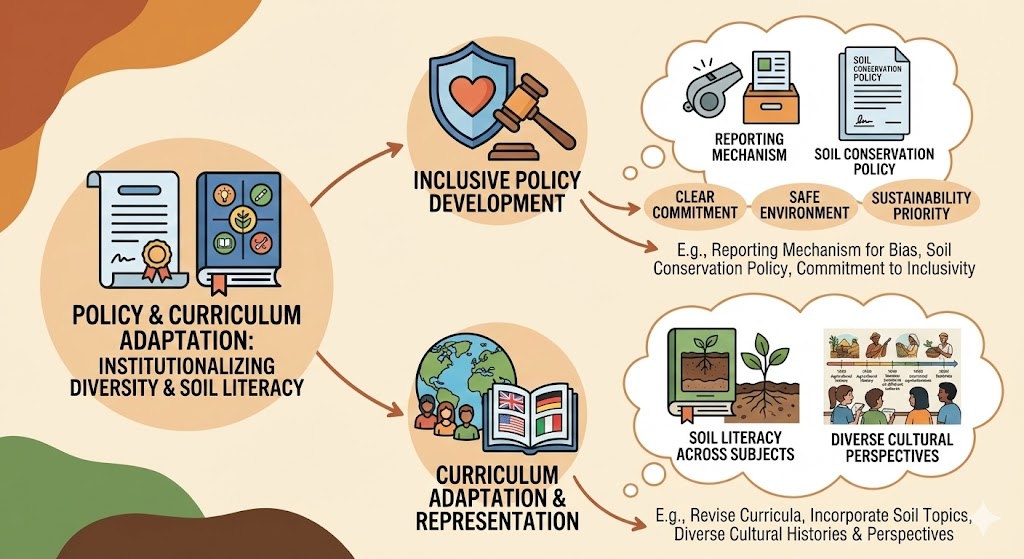
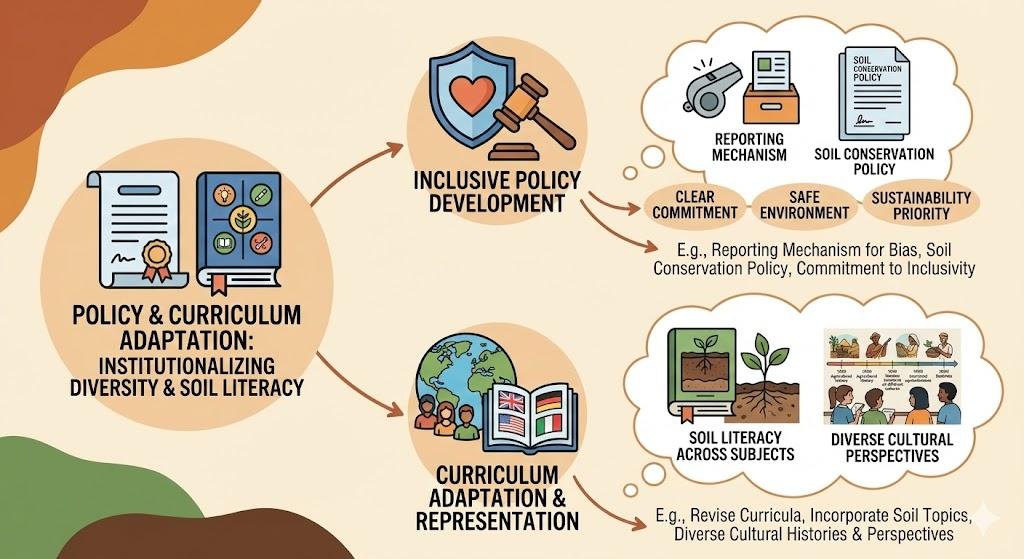
Policy Development:

  • Develop policies that clearly outline the school’s commitment to diversity and inclusion.
  • Adapt curricula to reflect diverse cultures, ensuring representation of various perspectives and histories.

E.g. Establish a reporting mechanism for discrimination or bias incidents, ensuring a safe and respectful environment. Draft policies that prioritize soil conservation education as part of the school’s commitment to sustainability and inclusivity. Revise existing curricula to incorporate soil literacy topics across subjects, ensuring representation of soil’s environmental, economic, and cultural significance.

 cuklture-of-respect


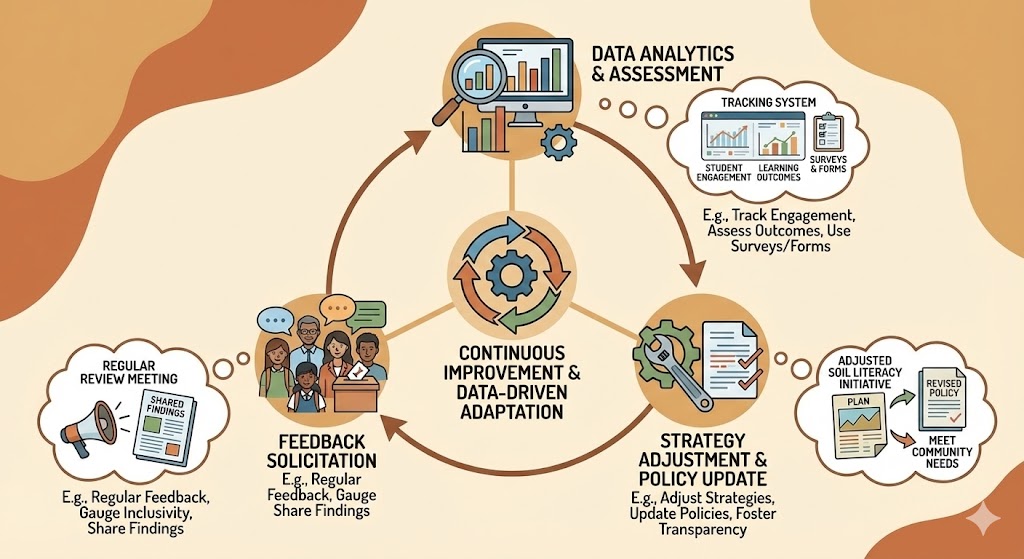
Monitoring and Evaluation:

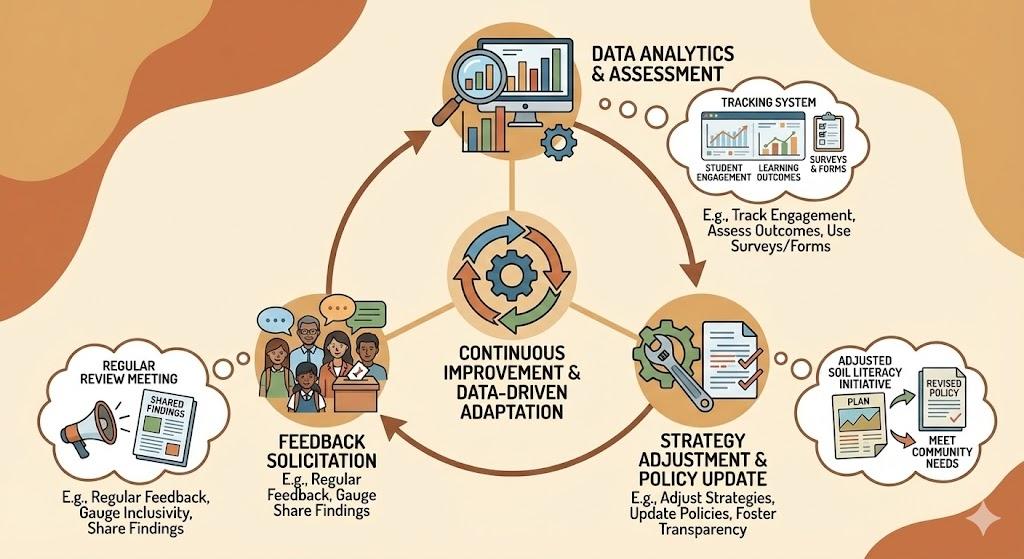
  • Use data analytics to assess the effectiveness of inclusion strategies and identify areas for improvement.
  • Solicit feedback from students, parents, and staff regularly to gauge inclusivity efforts.
  • Adjust strategies and policies based on feedback and data analysis to better meet the needs of the school community.

E.g. Implement a system for tracking student engagement and learning outcomes from soil literacy activities, using surveys and feedback forms. Regularly review soil literacy initiatives' impact and share the findings with the school community to foster transparency and encourage continuous improvement.

 cuklture-of-respect


monit-eva.jpg
acceci-enverior.jpg
professional-deve.jpg
§policy-dev.jpg
partnerships-collab.jpg
equitable-learning-app.jpg
cuklture-of-respect.jpg
Comments
BV

Borut Vrščaj 

Please see comments & suggestions in the attached file. 

In the section Provide equitable learning opportunities, there is excessive spacing at the beginning of the examples text. One example of a project could be collecting soil samples, drying and sieving them, then students could use it for creative activities.

In the section Professional Development for Staff, it would be beneficial to include training for teachers on different teaching approaches that address diverse student needs. Teachers could participate in seminars or workshops for this purpose. Additionally, a link is missing in the text.

In the section Create an accessible environment, the first bullet point contains an incomplete sentence and needs to be finished (“E.g. when …”).