
What are the key ecosystem services lost through soil sealing?
Sealing of soils generally includes the removal of the top horizons of the soil, the addition of brick fragments, metal, concrete and other materials on top of the newly created surface, followed by a layer of asphalt or other impermeable paving materials.
Soil sealing, particularly when completely impermeable surfaces like asphalt are used, significantly alters the physical, chemical, and biological properties of the soil beneath it. Sealing often causes severe, long-lasting, and sometimes irreversible loss of many soil functions, with magnitude depending on sealing intensity, soil removal, and the type of overlying impermeable material. The impermeable layer disconnects the underlying soil (lithosphere) from the air (the atmosphere) and the water cycle (the hydrosphere).
Examples of impaired soil functions are the exchange of air, the infiltration of water, the regulation of soil temperature and the cycling of nutrients between those “spheres”. As a result, a range of ecosystem services are affected simultaneously, such as provisioning of food, wood and fibre, groundwater recharge, climate regulation, water purification, flood mitigation, and cultural heritage.
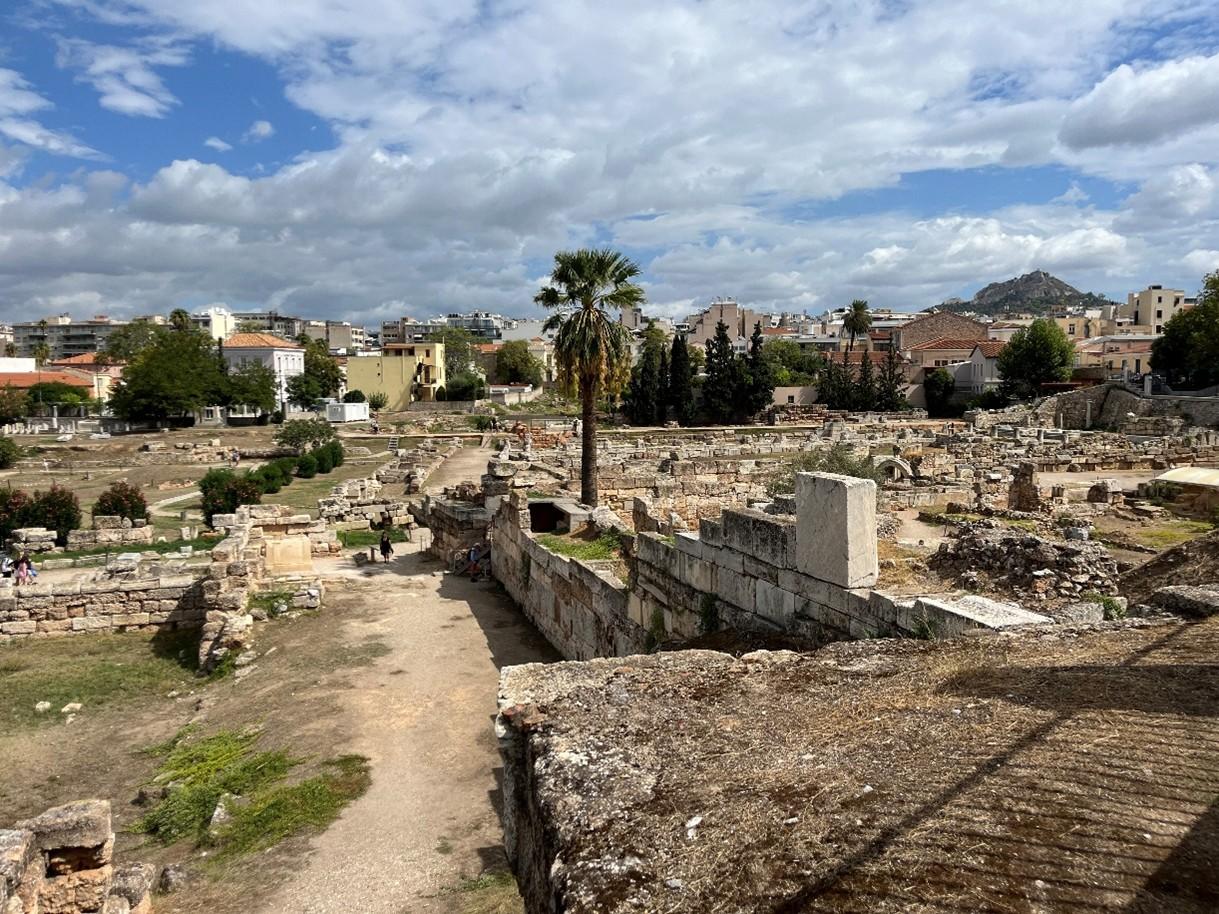
Remember that soil sealing can last for a long time, like at this archaeological site in Athens. © Hanne Ugstad, NIBIO

what are the numbers in the text?