
Controlling Factors
Erosivity (the capacity of rain and runoff to cause erosion):
To reduce erosivity, the energy of rainfall can be decreased by using vegetation cover. Vegetation intercepts rainwater, decreasing the amount and force of rainfall directly hitting the soil. The energy of runoff can also be reduced by plants and organic residues, which act as barriers and thereby reduce water velocity over the surface.
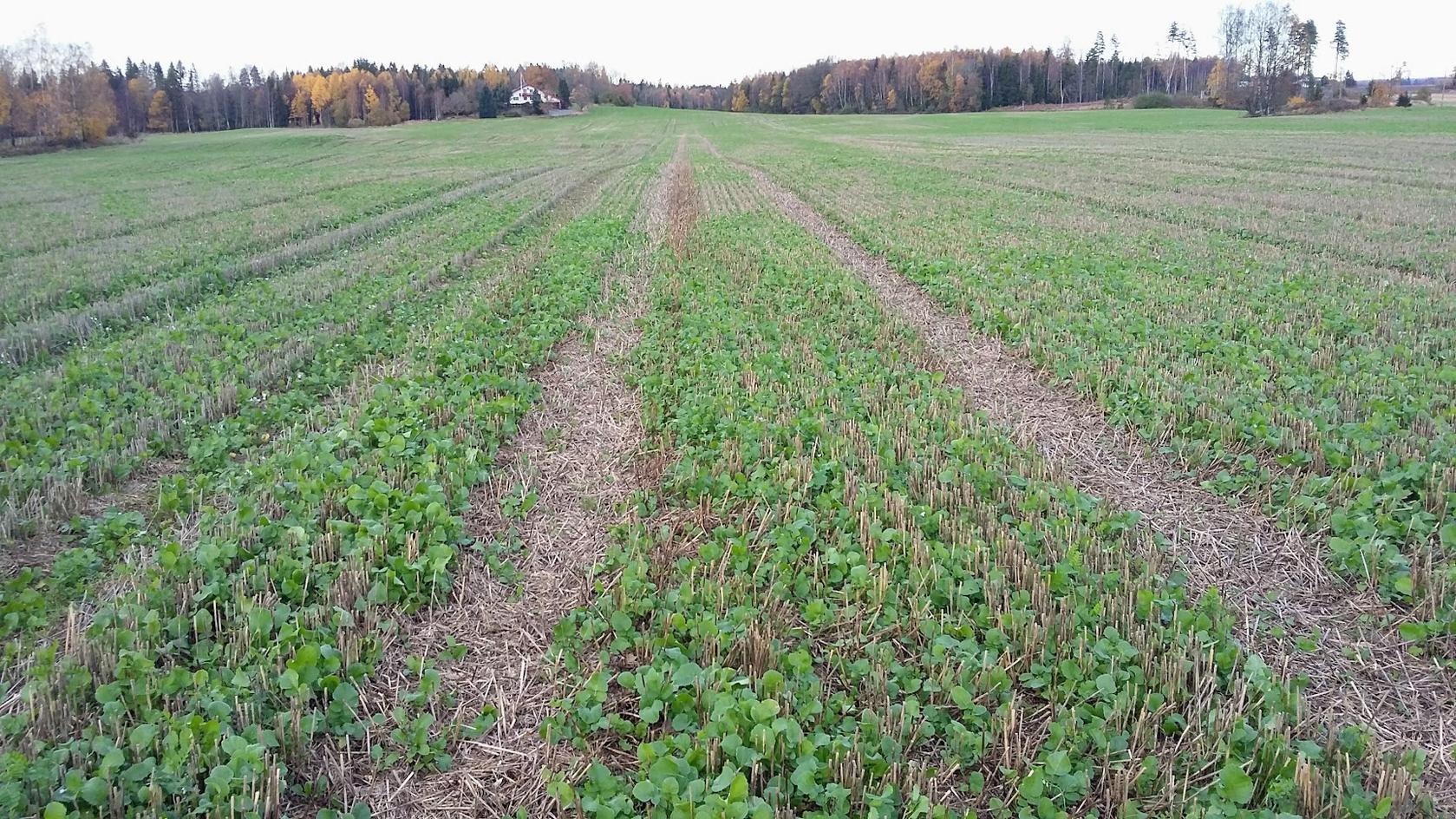
Protection of soil using plants and crop residues. (No changes were made to the original photo. © Jannes Stolte/NIBIO).
Erodibility (the susceptibility of soil particles to detachment):
Soil erodibility can be reduced by increasing the soil’s resistance to detachment. This can be achieved by raising soil organic matter where it is low, or by improving soil structure by e.g. liming or adding other types of amendments that increase the amount and stability of the soil aggregates or cohesion of soil particles.
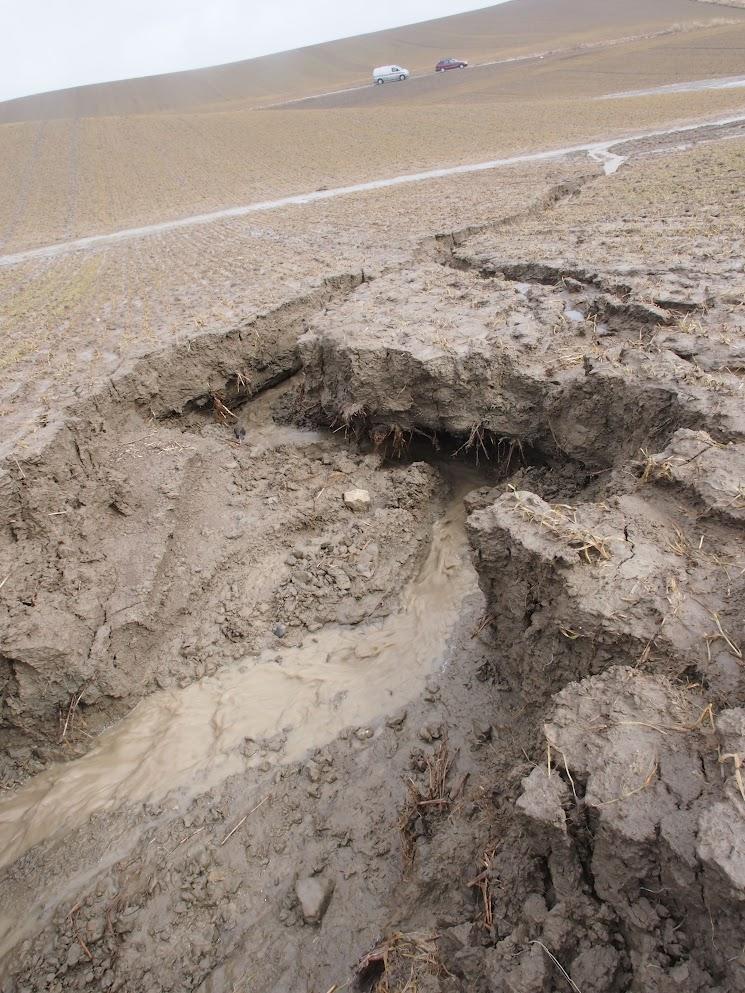
Highly erodible soil. (No changes were made to the original photo. © Torsten Starkloff/NIBIO).
Slope length and angle:
Slope angle is a key factor in soil erosion by water. Steep and long slopes accelerate erosion, resulting in a higher erosion risk compared to short and gentle slopes. The harmful effects of steep and long slopes can be mitigated by practices such as contour-plowing and terracing. The flat treads of terraces decrease the flow-velocity. Another option is to install barriers, such as vegetation strips placed perpendicular to the slope, to reduce the actual slope length of arable land area. This leads to decreasing flow-velocity on the slope, thereby increasing infiltration and retention potential.
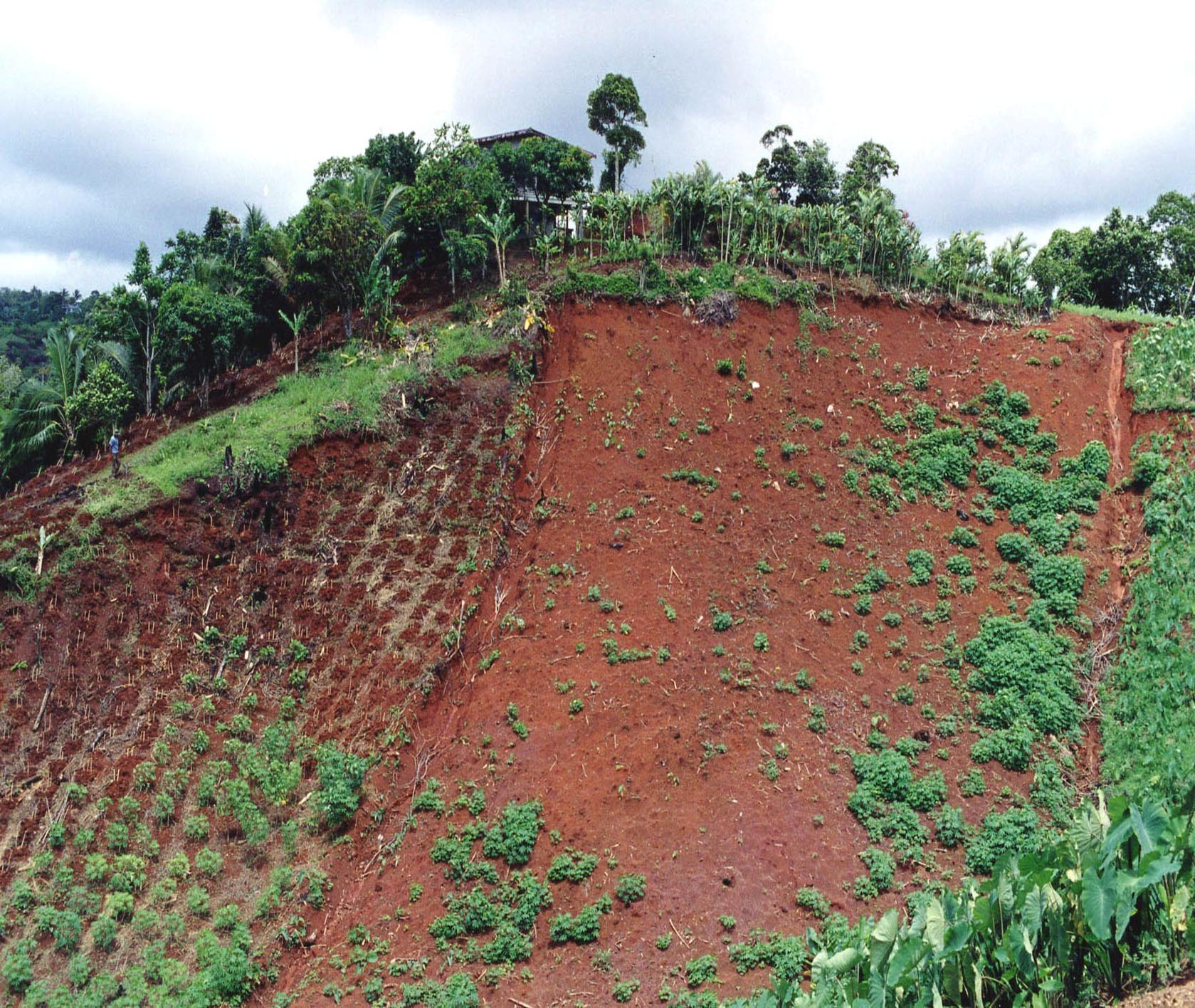
Steep slope used for agriculture (ginger) (No changes were made to the original photo. © Jannes Stolte/NIBIO).
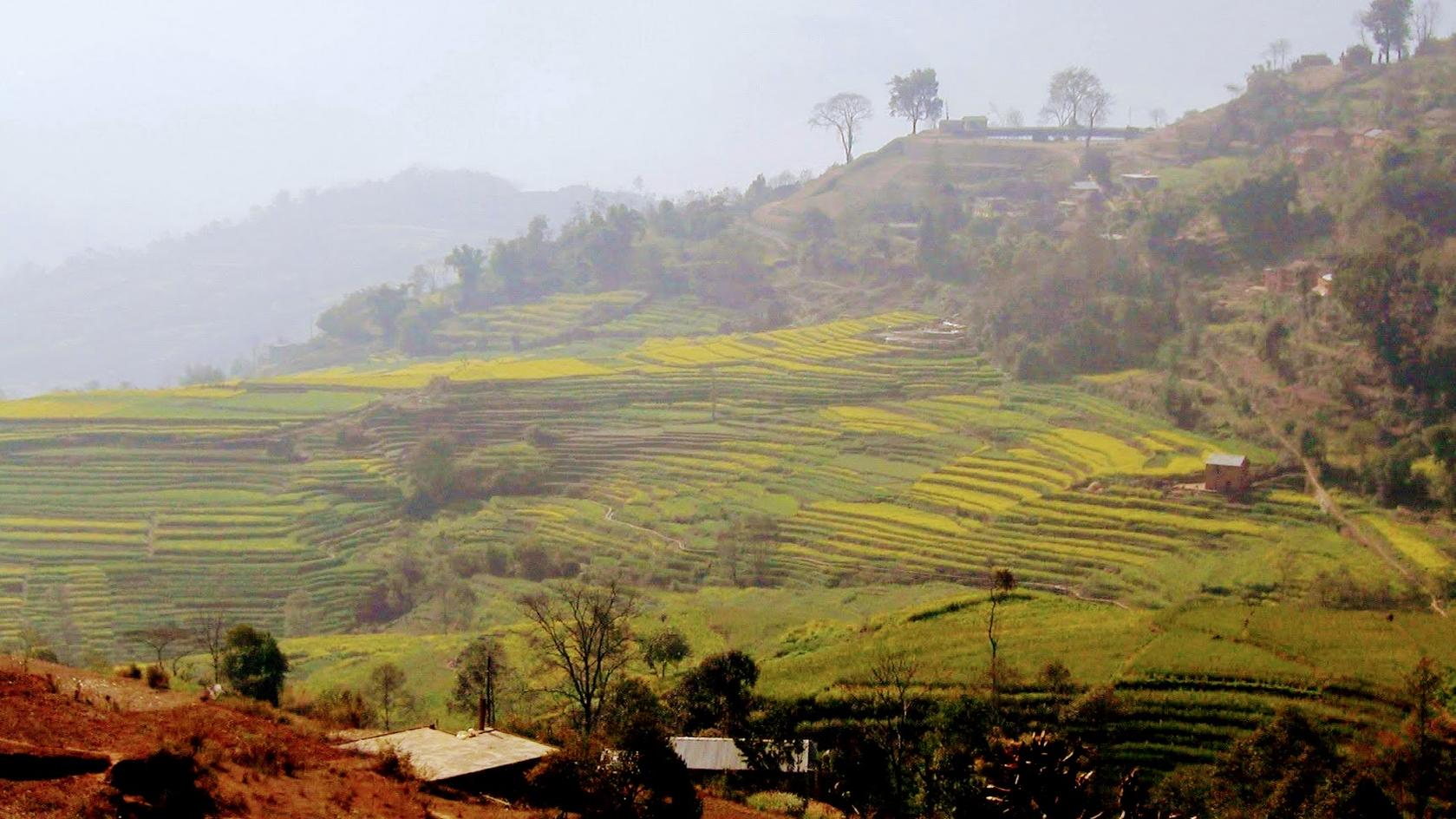
Terraced slope (No changes were made to the original photo. © Jannes Stolte/NIBIO).

The caption of some photos states that no changes were made, some does not say anything, is it consistent? What is <<Photo 19>> in the last caption?