
More than minerals: the organic component
Soil is not just crushed rock. Organic matter originates from living organisms and their remains, and its transformation is driven by soil life. It includes pieces of dead plants, roots, microbes, and carbon-rich compounds formed during decomposition – the process by which bacteria, fungi, and soil animals break down organic material.
Some organic matter exists as visible fragments, known as particulate organic matter. Other organic carbon becomes tightly attached to mineral surfaces, forming mineral-associated organic matter. This soil fraction is more stable and can remain in soil for long periods, contributing to carbon storage.
Organic matter darkens soil, improves structure, feeds organisms, and influences how water and nutrients are retained. In many ways, it links the non-living and living parts of the soil system.
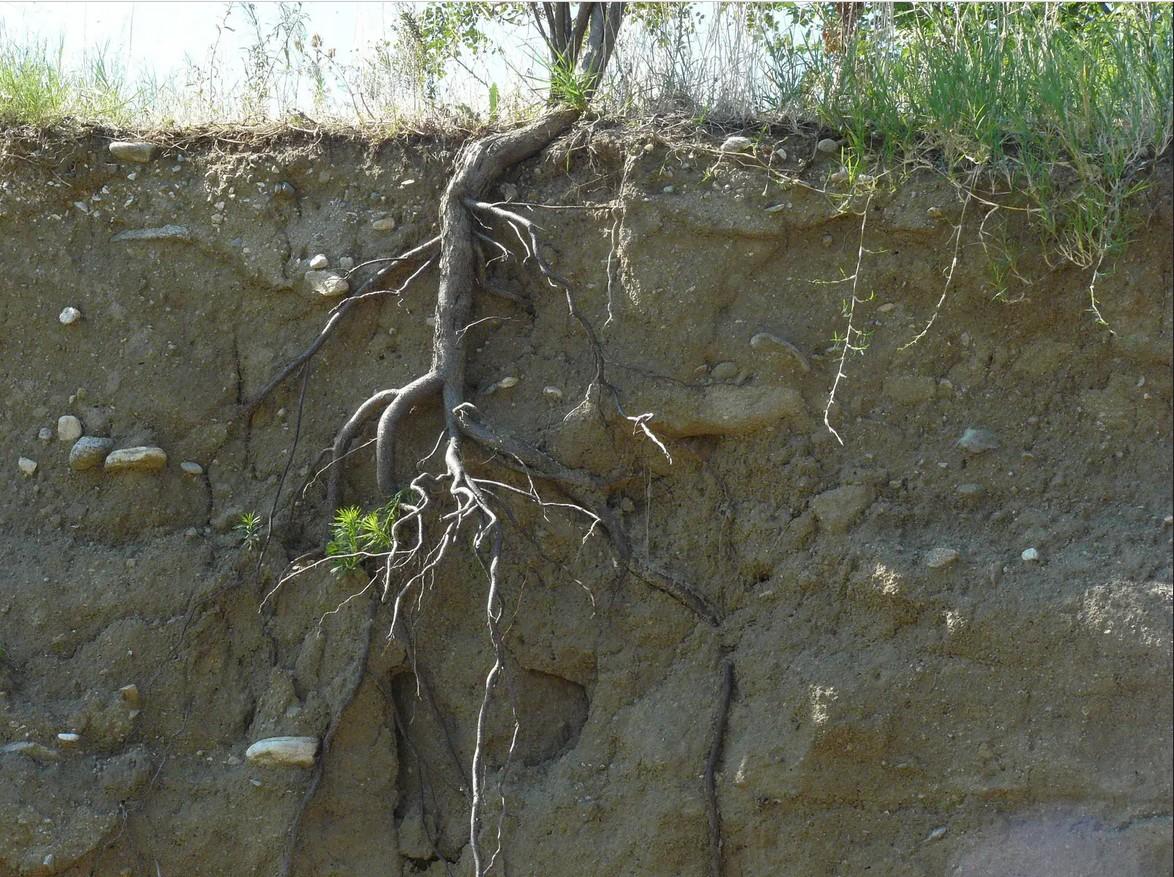
Left: © Soil section with tree root by Konstantinos Kourtidis, CC BY-NC-SA 3.0, no changes were made to the original photo.
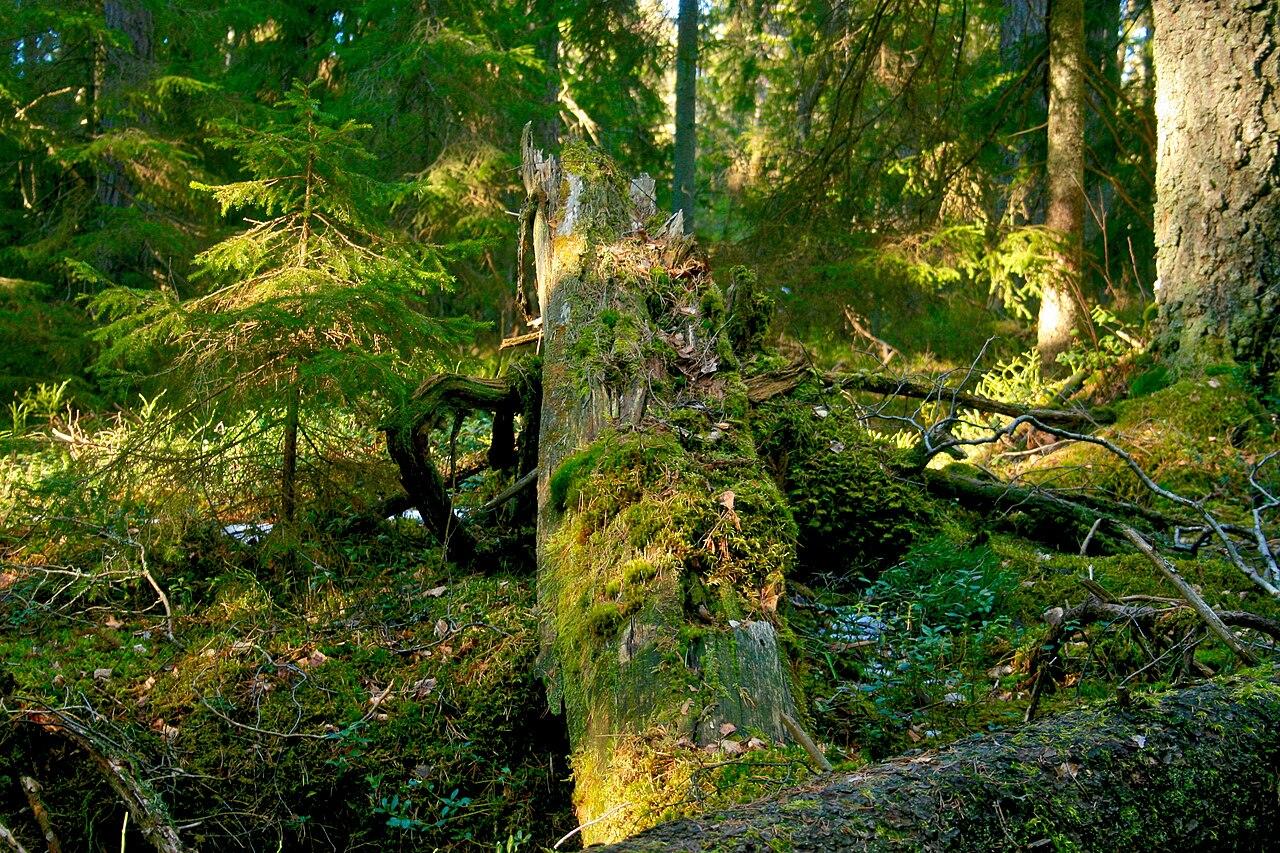
Right: © Dead wood in a forest by Silverkey (Mickaël Delcey), CC BY-SA 4.0, no changes were made to the original photo.

If you want to learn more about how organic matter is decomposed and stored in soil, check out this review article by Basile-Doelsch et al. and have a close look at the figures.
 Please log in or register to post a comment