
Water and air: the invisible half
The liquid component of soil is mainly water. Soil water fills part of the pore space between particles and acts as a transport system, carrying dissolved nutrients and organic compounds to plant roots and soil organisms. However, not all soil water is equally available. Some water drains quickly through large pores after rainfall, some is stored in smaller pores where plants can access it, and some is held so tightly to clay particles that plant roots cannot extract it. Thus, the way water is held in soil depends strongly on soil texture and structure.
The gas component of soil is the air found in the remaining pores. Soil air differs from the air above ground: oxygen concentrations are usually lower, while carbon dioxide concentrations are higher because plant roots and (micro)organisms are constantly respiring. In poorly aerated or waterlogged soils, oxygen can become so limited that microbes switch to alternative metabolic pathways. Instead of using oxygen, they begin to use other substances to obtain energy. In a way, this is similar to how our muscles switch to a different energy pathway during intense exercise when oxygen becomes scarce.
For example, in flooded soils such as wetlands or rice paddies, certain microorganisms produce methane while breaking down organic matter. Other microbes release nitrous oxide during transformations of nitrogen in the soil. Both gases are powerful greenhouse gases. In this way, small changes in soil pore space and oxygen availability can influence global climate processes.
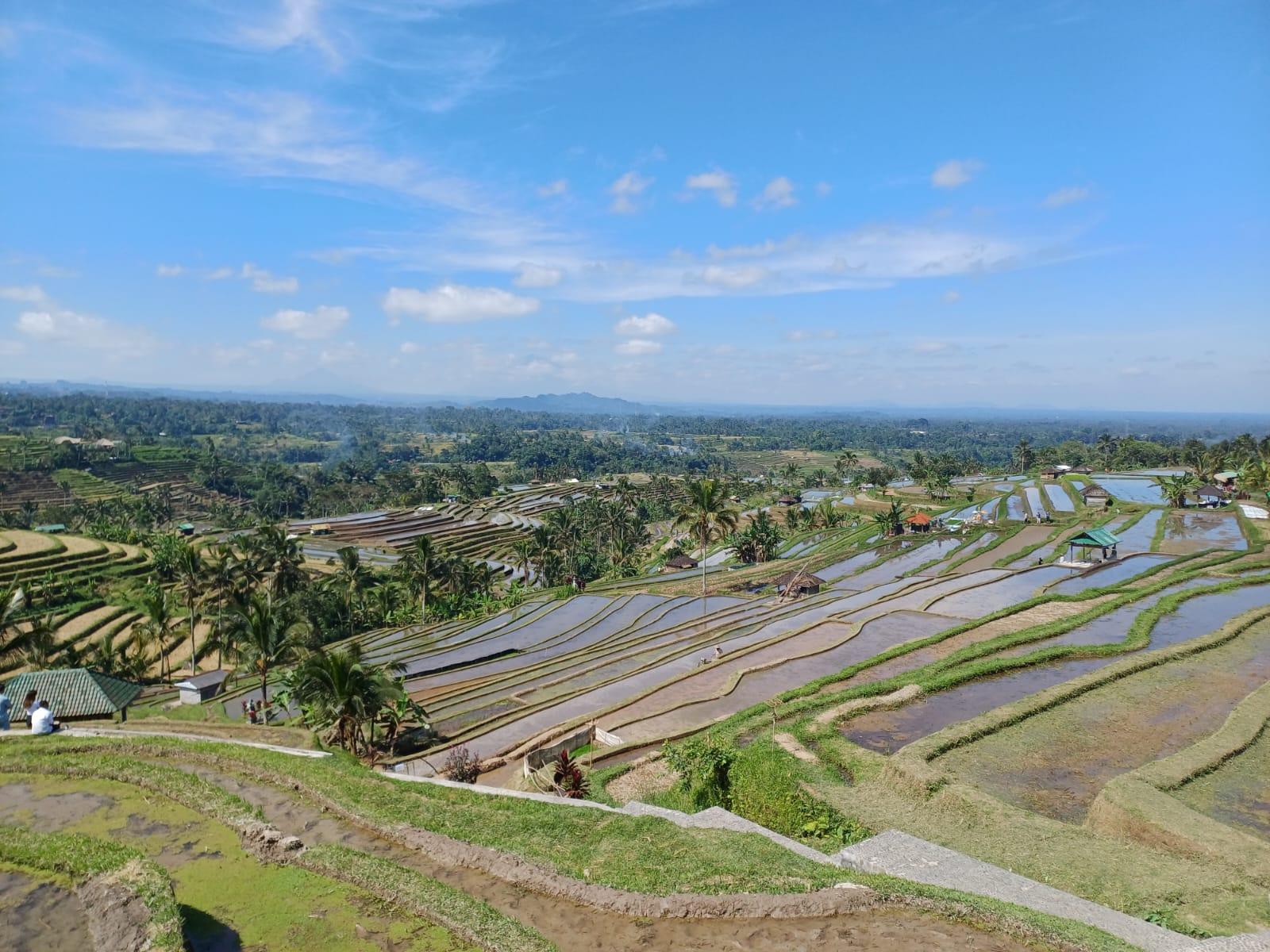
© Rice fields by Sabine Huber, BOKU University
Here is something surprising: after heavy rainfall, the air within soil can largely be replaced by water, and the balance between water and air can shift dramatically. Soil is therefore not a static material – it is a constantly changing environment where water and gases are continuously moving, reacting, and reshaping the conditions for life below ground.
Optional task: Watch this short (25 seconds) VR video that takes you to the surface litter layer, pore space, and water film in soil – from the perspective of a soil organism.
 Please log in or register to post a comment