
Soil forming processes: Reading the clues in a soil profile
In the last section, you learned about the five soil-forming factors - climate, organisms, relief, parent material, and time. These factors set the stage. They define the conditions under which a soil develops.
But what actually happens in the soil? If the factors are the background conditions, then soil-forming processes are the actions. They are the transformations that leave visible traces in the soil profile. And this is where things get exciting: if you know what to look for, you can read those traces.
Think of yourself as a soil detective. Every soil profile is a case file. The layers, the colors, the textures – they are clues. The question is not just “What does this soil look like?” but rather: What happened here?
Clue 1: a dark surface layer
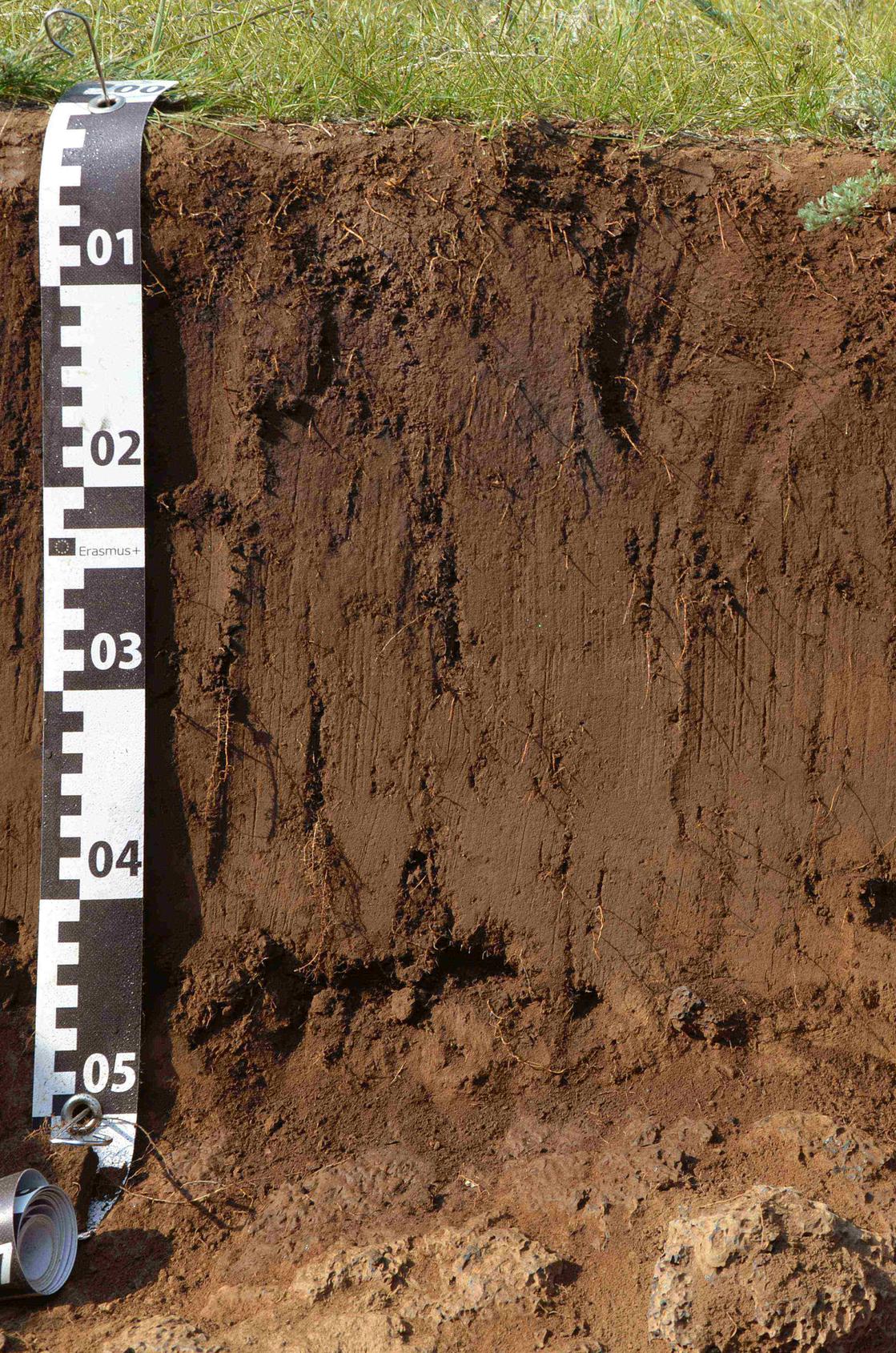
© ISRIC – World Soil Information
When the uppermost layer of a soil is dark brown or almost black, this usually tells us that organic matter has accumulated there. Leaves, roots, and other plant residues decompose and mix with mineral particles.
Over time, this process creates a nutrient-rich topsoil. A thick, dark topsoil often suggests abundant vegetation and relatively stable conditions over time.
Grasslands, for example, are known for developing deep, dark surface layers. So, when you see a dark horizon, ask yourself:
What kind of ecosystem might have contributed to this?
Clue 2: Grey and Rust-Coloured
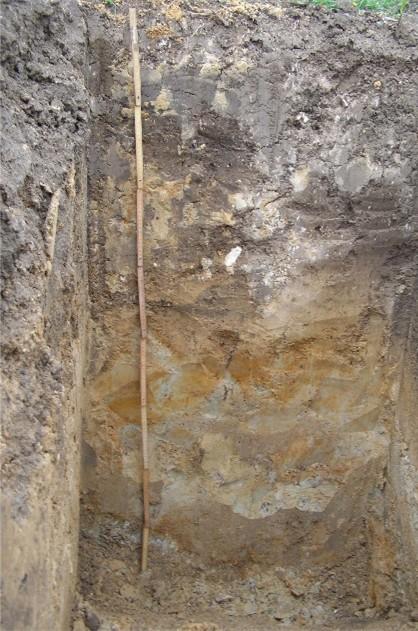
© Angelika Hromatka, BOKU University
Some soils show greyish colours mixed with reddish or orange spots. These patterns are often linked to water saturation.
When soil pores are filled with water for extended periods, oxygen becomes limited. Under these conditions, iron changes its chemical form (reduction), producing grey colours. When oxygen re-enters, reddish spots can form again (oxidation). This process is called gleying.
Such features suggest fluctuating groundwater levels or poor drainage. If you encounter these colours, ask:
Was this soil regularly waterlogged?
Clue 3: Bleached layer beneath the surface
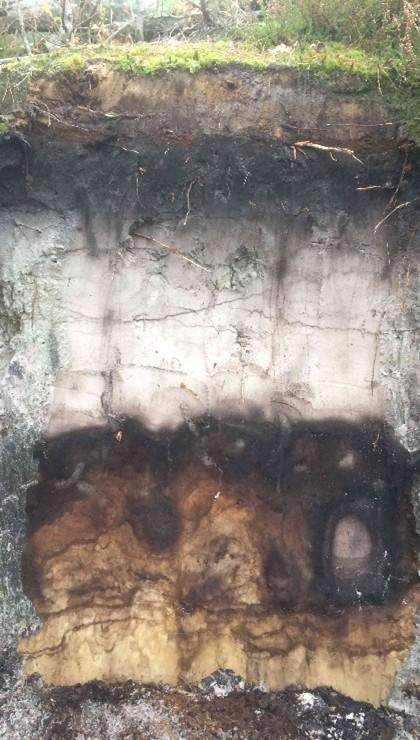
© ISRIC – World Soil Information
Imagine you see a soil profile with a dark topsoil, followed by a strikingly pale, almost ash-grey layer. Below that, the soil suddenly turns darker again - brown, reddish, or even black.
This pattern is a strong sign of podzolisation.
In cool, humid climates – often under coniferous forests – acidic water moves downward through the soil. As it percolates, it washes iron, aluminum, and organic compounds out of the upper layer and transports them deeper, where they accumulate.
The result is a bleached, nutrient-poor horizon above and a darker, enriched layer below.
If you encounter this sequence, ask yourself: What kind of vegetation grew here? How much water must have moved through this soil?
Clue 4: Blurred or mixed layers
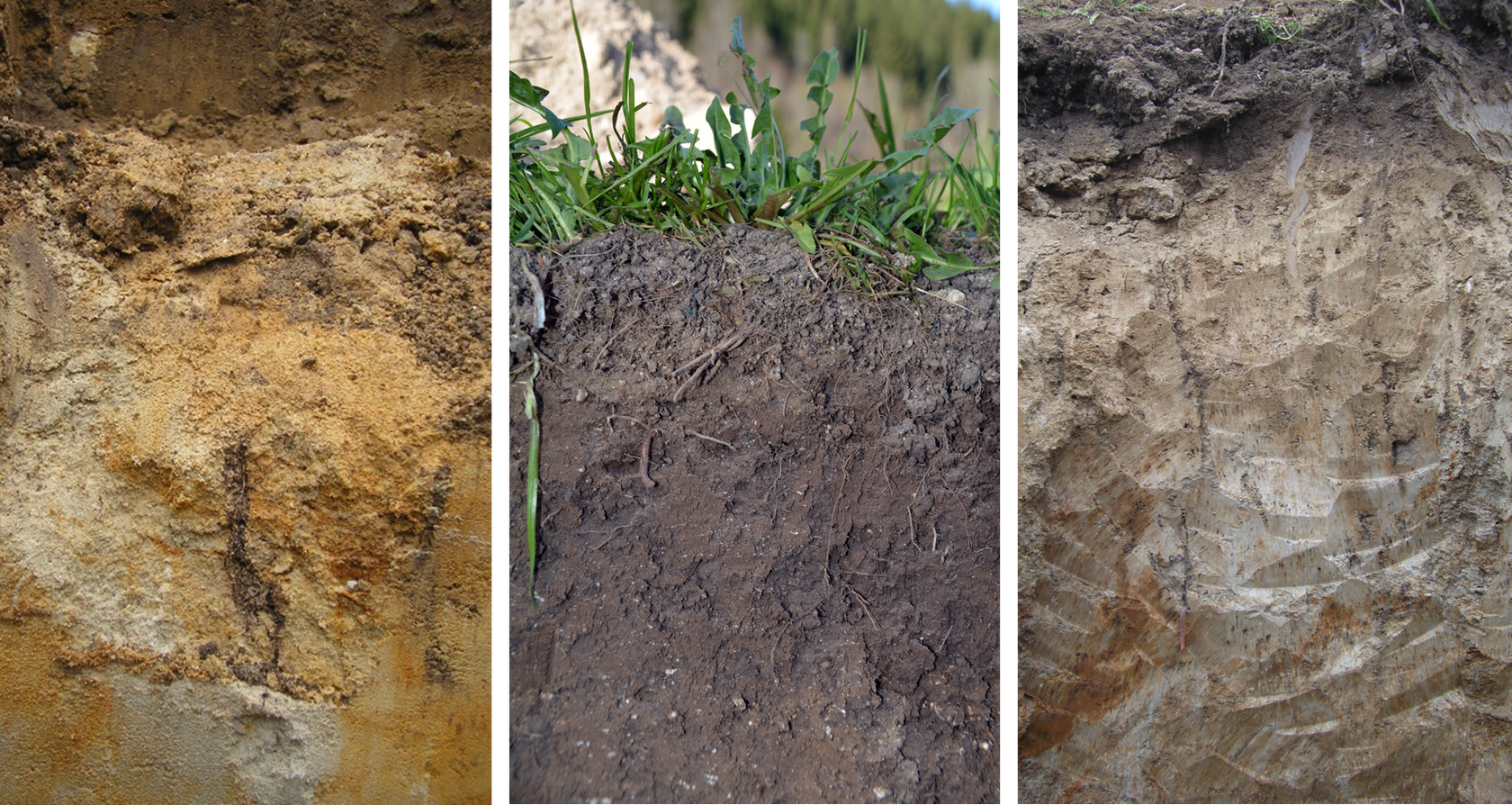
© Angelika Hromatka, BOKU University
Not all soil horizons are neatly arranged. Sometimes, boundaries appear irregular or mixed. Organisms such as earthworms, insects, roots – and even burrowing mammals – constantly move soil particles. This mixing process, called bioturbation, can blur layers over time. In such cases, the detective’s question is: Who has been working underground? Can you detect traces of bioturbation or even the organisms themselves in the profile images below?
Observe earthworms also in action by watching this time lapse video (~ 2 min)! Where will they dig their tunnels? How will the leaf layer on top change over time?

In the Quiz Question 3 Answer D also includes Answer E