
Soils around the world
Let’s start this lesson with observation. Take a close look at the soils in front of you and allow yourself a moment to simply observe. Which one catches your eye immediately? Which one would you want to explore in real life? Does one surprise you or make you pause?
Choose the soil that resonates most with you. Then briefly reflect on what sparked your interest. Is it the colours, the depth, the contrasts, or the patterns you notice? What kind of place do you imagine above this soil?
Write a few thoughts in your soil diary or on a piece of paper. Focus on your observations rather than correct or incorrect answers.
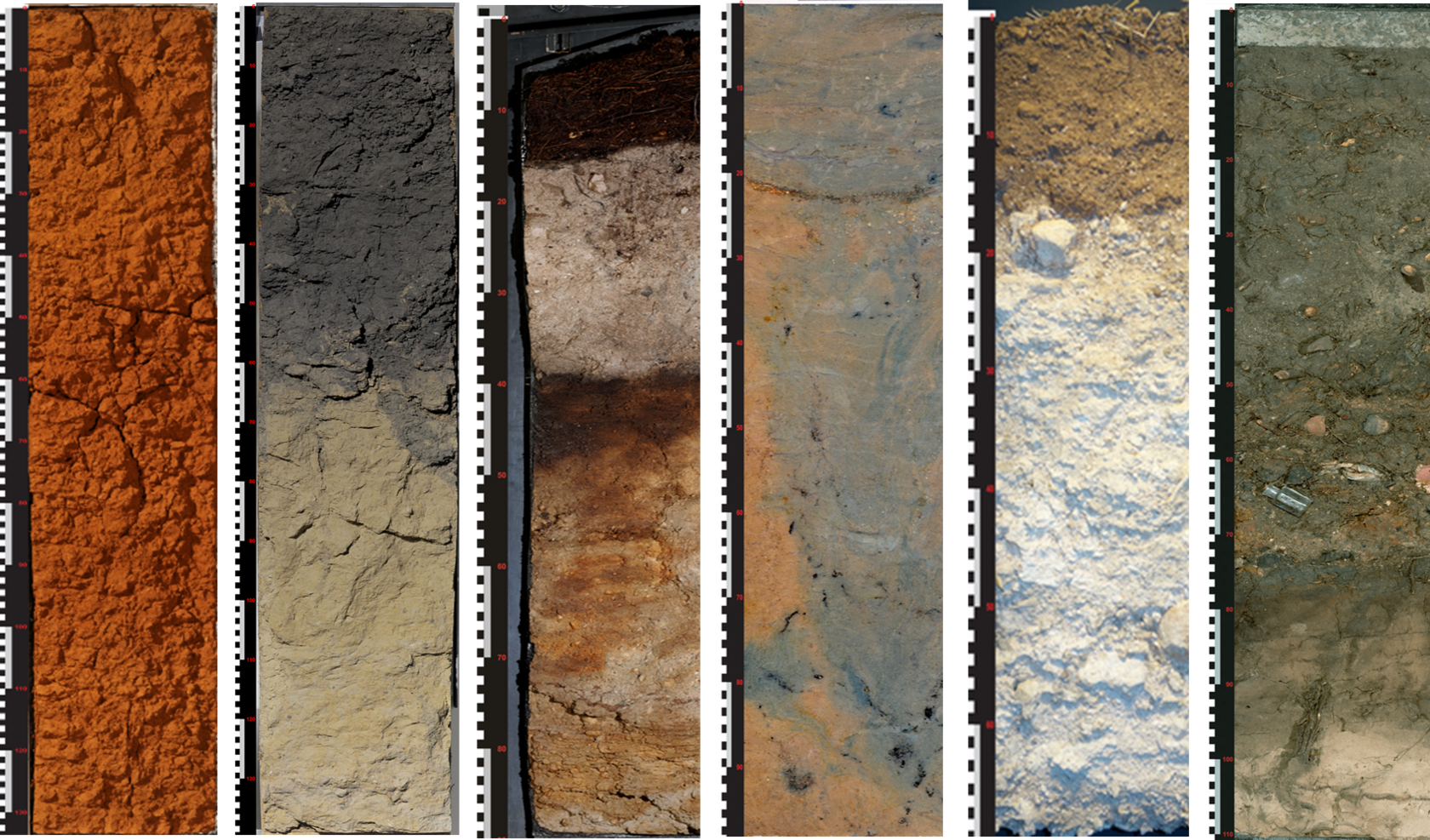
© Soil monolith images by ISRIC – World Soil Information
You may wonder what exactly you are looking at. These images show soil monoliths, carefully extracted vertical sections of soil. Soil scientists study soils by observing such vertical cross-sections, called soil profiles, which reveal the different soil layers (or horizons) that formed over time. Soil profiles are typically about 1–2 meters deep and are studied by exposing a vertical section of soil, for example by digging a pit or drilling a borehole. In some cases, a section of the profile is carefully removed and prepared as a soil monolith, preserving the natural layers for display or study, like the ones shown here.

I cannot edit the introductory text to Modul 2. The full stop is missing at the end of this sentence: Explain why soils vary using the five soil-forming factors