
From raw soil to finished construction
Depending on the composition of the soil and the required properties of various building elements, a wide range of earthen construction methods has developed over time. In some cases, soil materials are used almost directly. Loam, for example, can be applied to woven wooden frameworks in a technique known as daubed earth, or compacted layer by layer to form solid rammed earth walls. In other cases, soil materials are processed into more standardised building elements such as bricks, roof tiles, or wall tiles. Clay-rich soils are shaped into bricks that are first air-dried and, in many cases, later fired to increase their durability. Sand and gravel, which also originate from soil deposits, are commonly used in foundations or mixed into concrete.
To improve the quality of locally available soils, builders traditionally adjusted the composition of loam by adding mineral or organic materials. Sandy loams could be strengthened with clay, while clay-rich loams were often mixed with sand or gravel to enhance compressive strength and reduce shrinkage and cracking during drying. Organic additives such as straw or other plant fibres were also commonly incorporated. These fibres help stabilise the material, reduce cracking, limit moisture absorption, and can improve thermal insulation.
The diversity of local soils and environmental conditions has resulted in a wide range of earthen construction techniques worldwide. These methods can be broadly grouped into three categories: (i) monolithic construction, such as rammed earth walls formed by compacting moist soil; (ii) brick construction, using air-dried adobe bricks or fired clay bricks; and (iii) hybrid systems that combine loam with structural frameworks made from wood or other materials.
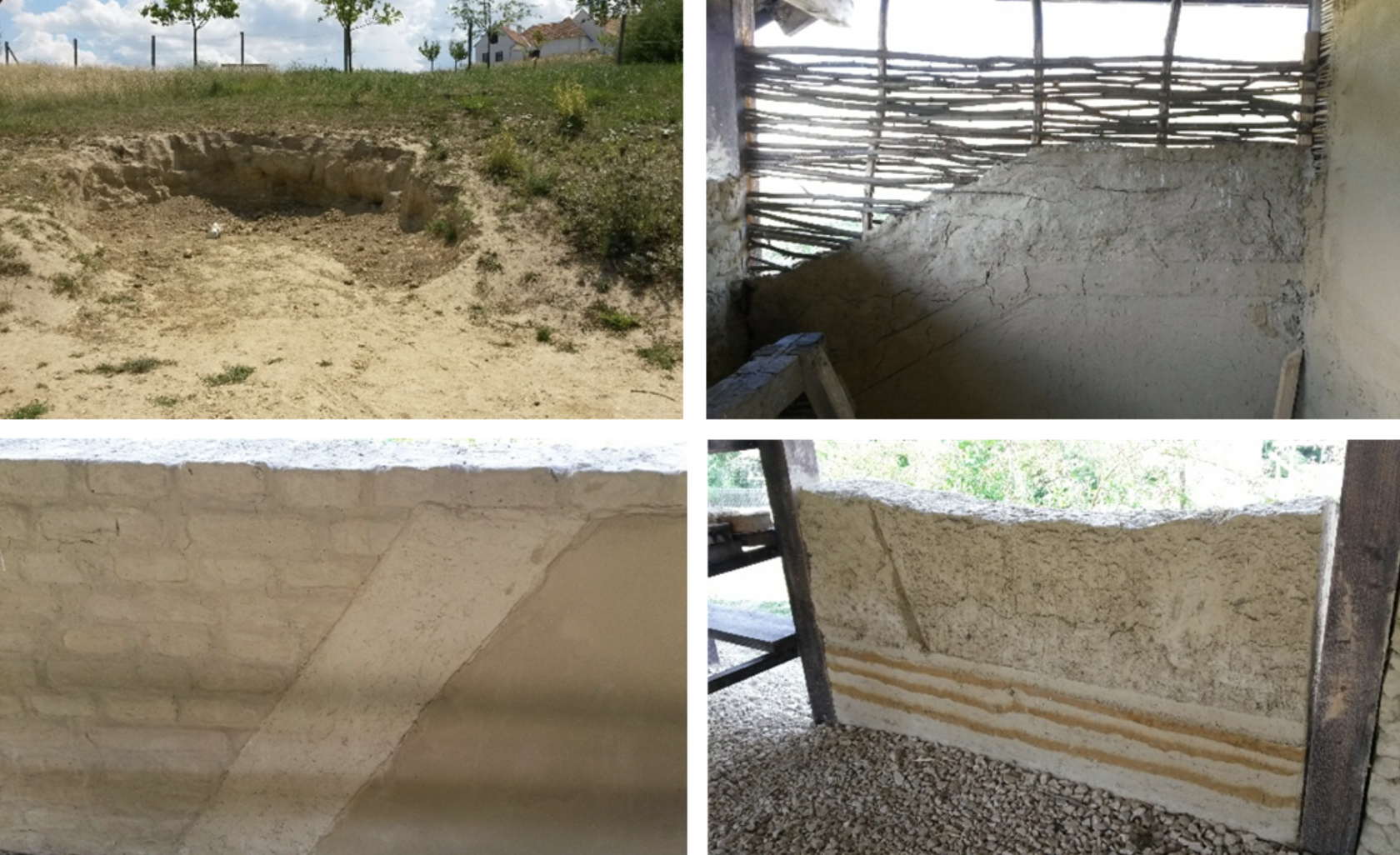
Loam pit and different construction techniques at Weinviertler Museumsdorf Niedersulz, Austria, © Sabine Huber, BOKU University.
Upper left: Loam pit; Upper right: Daubed earth is formed with woven wooden strips, which are covered with moist soil, sometimes combined with sand or straw.
Bottom left: Air-dried adobe bricks with layers of loam render.; Bottom right: Rammed earth wall formed by compacting layers of soil by stamping.
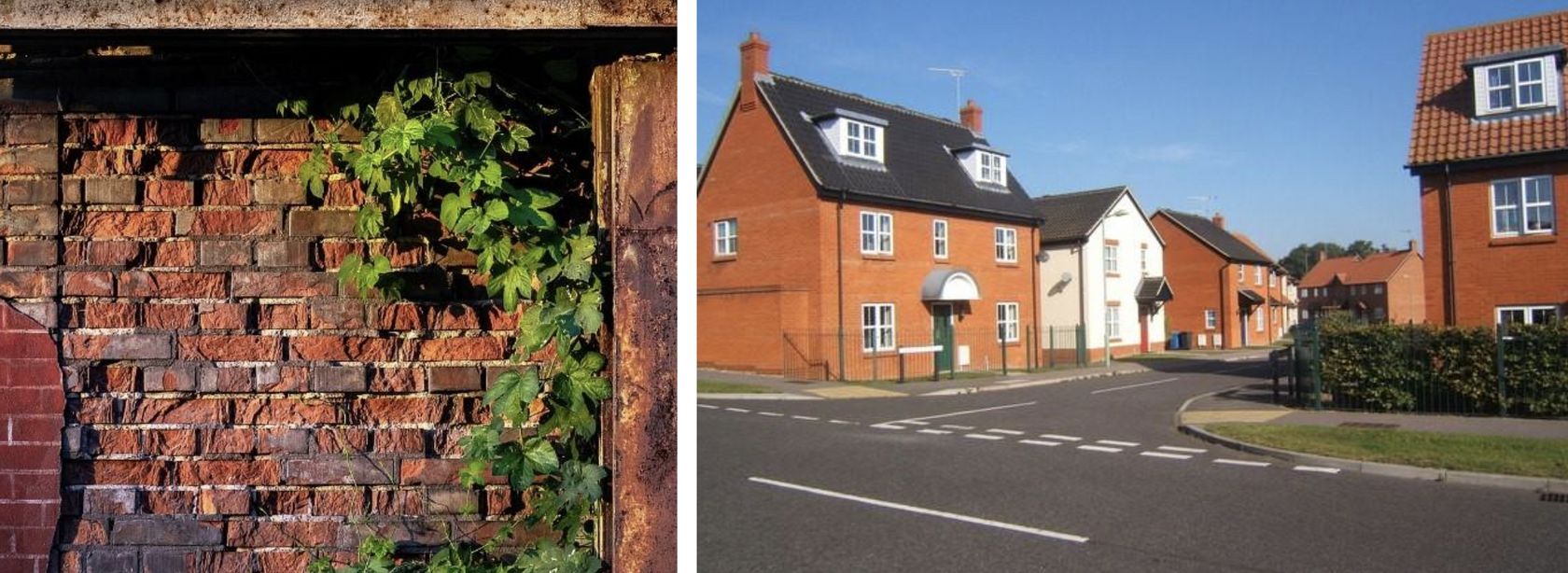
Left: Brick wall by Radomianin / Wikimedia Commons / CC BY-SA 4.0
,_2024-07-20.jpg)
Right: Modern brick houses by Andrew Hill, CC BY-SA 2.0

 Please log in or register to post a comment