
The 2,000 m² behind every meal
Globally, about 95% of our food comes from soil - either directly through crops, vegetables, and fruit, or indirectly through animal feed. To put this into perspective: if the world’s arable land were divided equally among everyone on the planet, each person would have roughly 2,000 m² – about half a football field – to grow their share of food. The Global Fields (“Weltacker”) initiative visually demonstrates how much space is needed to produce the crops and products we rely on every day. Interestingly, most crops are not eaten directly: with the exception of rice, less than half of the grain harvest goes straight to human consumption. Over one third is fed to animals to produce milk, eggs, or meat, and another portion is used for biofuels or industrial raw materials.
To see this more clearly, watch this time lapse video (~2 min) of maize growing for 12 days. Observe how the plant develops: what appears first, the roots or the leaves? This simple observation highlights the foundational role of soil – all above-ground growth depends on roots anchored in the soil.
Optional reflection: To make this more personal, take a moment to recall your breakfast. Which items – cereal, fruit, milk, honey, bread – originated as plants grown in soil? Could all of this fit on your 2,000 m² plot? By thinking like this, we begin to see how much soil underpins our daily life, even before the food reaches our plate.
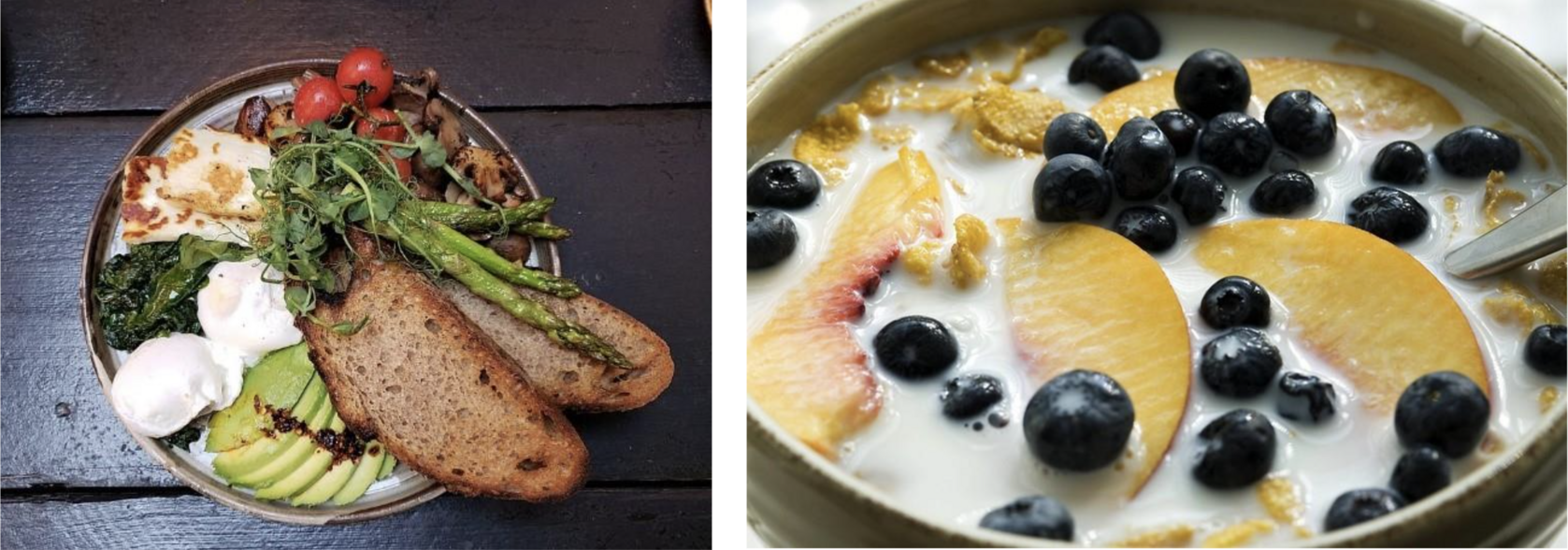
Left: © Garden breakfast by Andy Li, CC0

Right: © Cereals and fruits by Brian, CC BY-NC-SA 2.0, no changes were made to the original photo
 Please log in or register to post a comment