
Why choose soil for building?
Soil-based materials have long been used in construction for practical and environmental reasons. A key factor is availability. In many regions, soil can be obtained directly from nearby fields, pits, or construction sites, making it a readily accessible building material. In contrast, alternatives such as stone or timber are sometimes scarce or require long-distance transport. Using locally available soil therefore reduces both costs and effort.
Another reason is the material properties of soil-based building materials. Loam walls, for example, have high thermal mass, allowing them to absorb heat during the day and release it slowly over time, which helps to stabilise indoor temperatures. In hot climates, this can keep buildings cooler during the day and more comfortable at night. Loam also regulates indoor humidity by absorbing and releasing moisture, contributing to a healthy indoor climate.
Soil-based construction is also valued for its cost efficiency. Because earthen materials often require little processing and can be sourced locally, construction can be carried out with relatively low financial investment. In many regions, building knowledge has been passed down through generations, enabling communities to construct houses using locally available skills and materials.
Today, earthen construction is attracting renewed interest in many parts of the world, including Europe. One reason is its resource efficiency. Soil-based materials typically require less energy to produce than many modern building materials. In addition, loam components can often be reused or recycled simply by adding water and reshaping the material. These properties make earthen construction an attractive option for sustainable building and highlight how traditional knowledge can contribute to modern approaches to resource-efficient architecture.
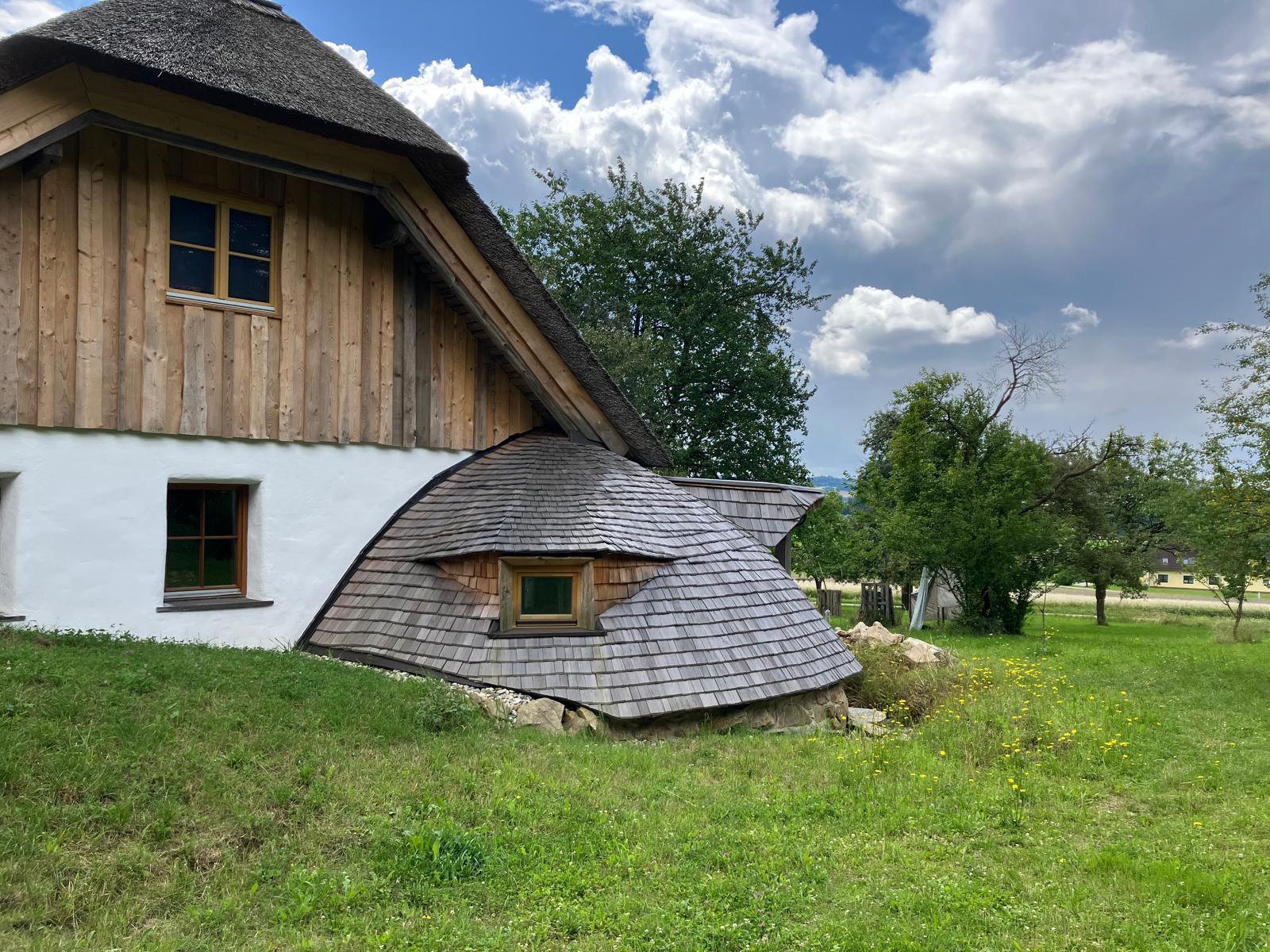
© Modern house built - among other materials - with loam, by Sabine Huber, BOKU University
Side note: The house is still under construction in 2026.
 Please log in or register to post a comment